
Every Hunt demands a Sacrifice
Coming Soon
Every Hunt demands a Sacrifice
Coming SoonBrennach stopped six feet from the crate.
"My boy is down there."
He said the words with the flat anguish of a man who had spoken them far too often, to himself in the dark hours, to the heavens above, and to the bottomless drink around them. Words that had been repeated so many times that they were worn smooth of everything except their essential, irreducible weight.
"The creature sings with his voice," Brennach continued. "Every night. Since it took him, I hear my boy. I hear him singing the way he did when he mended nets on this dock, the way he sang when he was hauling pots off the point, that same voice, that same exact voice, and I know... I know ... what it is. I know it's ... not him."
His voice cracked on the last word.
"You want to kill that thing in the water. But it's all I have ... it's all... that's left of him."
Brennach took a step closer.
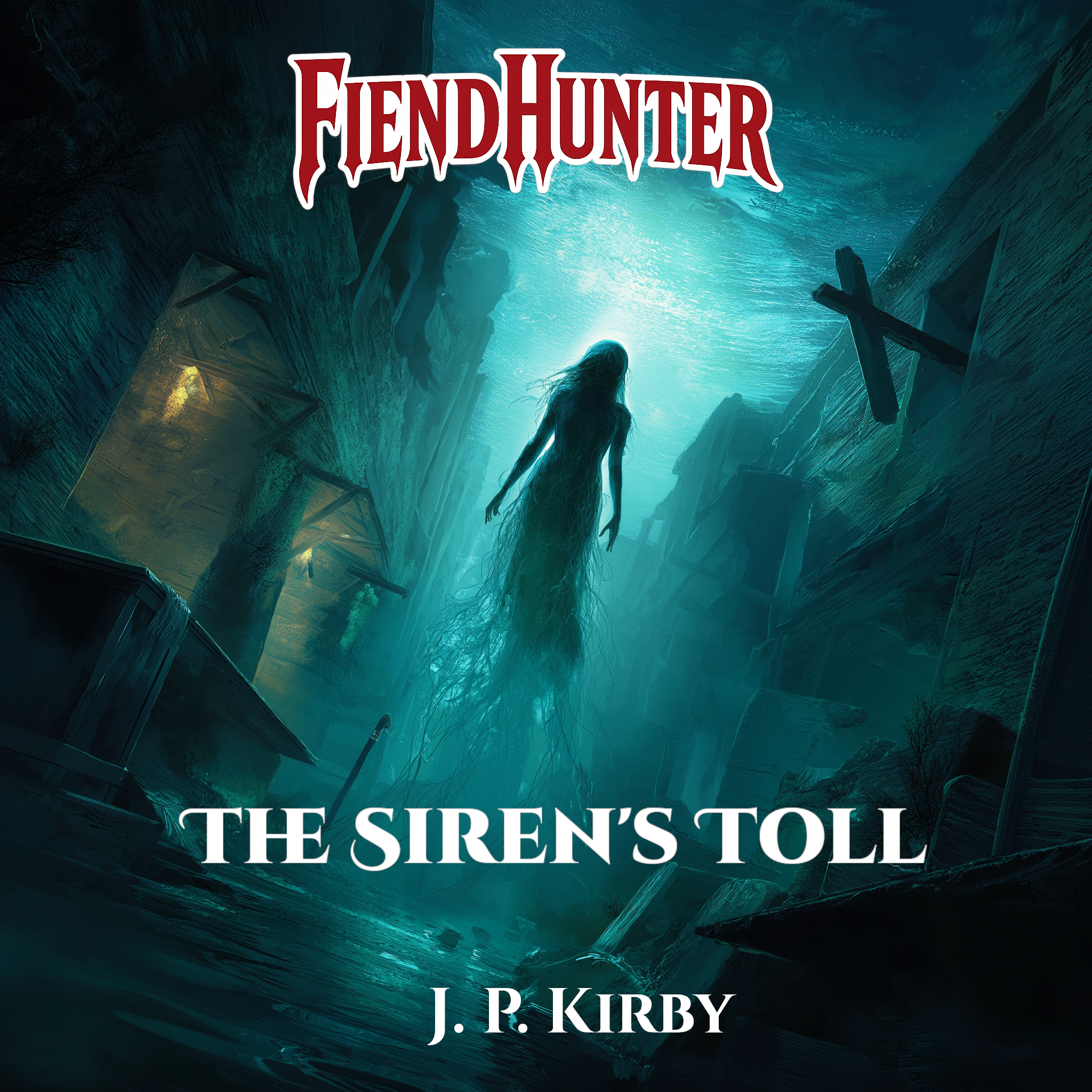
The monster sings with the voices of the dead. The village goes to the water anyway.
A fishing village where the sea has swallowed half the streets. The young have gone. The old remain. Something in the flooded ruins beneath is singing, and those who listen hear the voices of their own dead. They walk into the water at night. They don't come back.
Tarahn arrives hunting the source. But this beast does not simply kill — it offers something far crueller than death. And it knows exactly what voice will bring the hunter to the water's edge.
Something beautiful and terrible dwelling in the flooded ruins below — a shape rendered in translucent flesh and bioluminescent light, trailing through the submerged streets like a ghost bride. Its song resonates through water and bone. Those who hear it do not hear a monster. They hear the person they miss most.
This beast weaponises the one thing Tarahn cannot defend against. The hunt forces him into the water, into the song, and into a memory so vivid and so whole that walking away from it may be the hardest thing he has ever done.